
Hygienic design is important to so many food processors. For decades, Triangle has been known as the leader in sanitary bagging systems including being the world's ONLY 3-A certified VFFS. 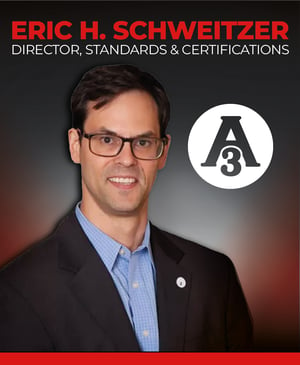 We sat down for a 2-part discussion with Eric Schweitzer, Director of Standards & Certifications, of 3-A Sanitary Standards, Inc to discuss why certification is important. Eric's background includes:
- Secretariat and facilitator for nearly 100 individual processing equipment standards and system accepted practices.
- Oversees the credentialling, coordination and reporting of Certified Conformance Evaluators who conduct independent Third Party Verification inspections.
- Communicates the benefits of 3-A's prescriptive fabrication requirements
Q: Why does 3-A certification give end-users a sense of relief?
Eric: It’s about confidence.
Equipment that carries the 3-A Symbol has been demonstrated to be in conformance with relevant 3-A Sanitary Standards. It has passed the rigorous 3-A SSI Third Party Verification (TPV) inspection.
That means one of our 3-A SSI Certified Conformance Evaluators (CCEs) has laid their hands on the equipment to ensure that there are no voids behind seals or sharp edges and lack of radii in mating parts that could harbor pathogens. They measured the slopage for drainage and reviewed all engineering drawings to ensure that the fabrication process is repeatable as reviewed. CCEs really get in there to verify that the equipment meets the Standard.
That matters, because objective equipment inspections give processors, regulators, and equipment suppliers confidence that equipment, replacement parts, and system components displaying the 3-A Symbol and RP Mark truly meet the sanitary design and fabrication criteria of relevant 3-A Sanitary Standards.
Remember, the 3-A Standards and Accepted Practice are referenced in the FDA Grade ‘A’ Pasteurized Milk Ordinance (PMO) and USDA Guidelines for the Sanitary Design and Fabrication of Dairy Processing Equipment. Equipment carrying the 3-A Symbol and/or RP Mark gives regulators bullet-proof confidence in the hygienic design of the equipment or system components without the need to perform their own engineering and design review.
The same is true for processors, or food manufacturer end users. Given a choice, they happily pay a premium for equipment bearing the 3-A Symbol and RP Mark over equipment and components that do not carry the certification. It’s because they don’t have to take the equipment apart and dig around inside of it themselves to look for things like voids and lack of radii producing sharp corners that cannot Clean-in-Place (CIP) clean. They can also cross reference the equipment to the 3-A database of certificate holders so they know which equipment is 3-A certified, which models and which company made it.
Q: While the entire Triangle machine is certified, why is the forming tube certification important?
Eric: The forming tube is one of the most demanding design challenges in a vertical form fill seal machine from a hygienic standpoint, and it's a good example of why component-level certification matters.
In a VFFS system, the forming tube is in continuous direct contact with the product being packaged. 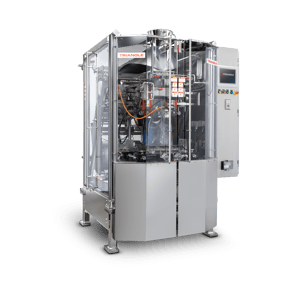 It guides product from the feed system through the bag-forming and sealing mechanism. Depending on the product — a dry dairy powder, whey protein concentrate, a particulate food — you may have significant product residue accumulating on interior surfaces throughout a production run.
The hygienic design requirements for that kind of component are exacting. Internal surfaces must be free of voids, crevices, and sharp corners that can trap product and resist cleaning. Drainage must be adequate. Surface finishes must meet the criteria that allow effective sanitation — whether CIP or COP. The geometry of the tube itself has to support cleanability, not just product flow.
The 3-A TPV inspection for a component like the forming tube goes to that level of detail. The CCE isn't just reviewing the overall machine — they're verifying that the product contact surfaces of individual components meet the Standard's requirements for materials, surface finish, and design. That physical, hands-on verification is what separates 3-A certification from a design review on paper.
For a processor, knowing that the forming tube specifically has been evaluated as part of a complete system certification — not just the frame or external components — is meaningful. It means there are no unexamined product contact points in the line.
Q: Walk us through the process Triangle goes through to receive 3-A Certification and keep it.
Eric: First, I want to point out that just earning and maintaining a 3-A Symbol is, in and of itself, a demonstration of commitment to hygienic design and the 3-A Sanitary Standards. I think that context is key.
To answer your question, the journey to authorization begins with design and culminates with a rigorous on-site Third Party Verification (TPV) inspection by a 3-A SSI Certified Conformance Evaluator (CCE).
The first step is to determine which 3-A Sanitary Standard, or Standards plural, apply.
There is a 3-A Sanitary Standard for General Requirements Standard (00-02), which is the baseline for hygienic equipment design across the food and beverage industry. It defines acceptable materials, construction methods, and design principles for equipment that processes everything from milk to beverages to food ingredients. The General Requirements (GR) apply across the board.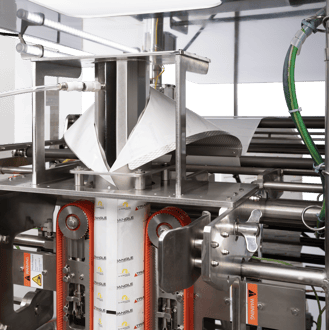
In addition to that, there are more than 80 additional 3-A Standards for specific equipment types. These build on the GR.
The next step is to review these standards to determine if your equipment meets the minimum criteria for hygienic design and scope. These standards do not inform a fabricator how to build the equipment and are narrow in their scope.
Next, the manufacturer must compile an Engineering Design Technical and Construction File (EDTCF) ahead of their Third Party Verification Inspection. This is a comprehensive dossier containing:
- Material certifications (to prove the steel/plastic is what you say it is).
- Test results (e.g., CIP - Clean-in-Place effectiveness).
- Quality control manuals and maintenance instructions. Engineering drawings, change orders, bill of materials, etc.
The CCE will work with the applicant to ensure the EDTCF is completed. Once these initial steps are complete, the TPV inspection can occur. This is the onsite CCE visit at the fabrication plant, or final assembly location. The CCE physically inspects the finished equipment, checking welds for pits or crevices, measuring surface roughness, and verifying that every "dead end" is eliminated.
The CCE is there to verify the manufacturing process and facility are suitable to produce repeatable hygienically designed equipment.
If the equipment is in conformance, the CCE submits a TPV Report to 3-A SSI. After an administrative review, the manufacturer is granted a license to display the 3-A Symbol or RP Mark on that particular model of equipment reviewed. The authorization is valid through December 31 of the year in which it is granted.
Maintaining the 3-A SSI Symbol Authorization
This brings us to maintaining the 3-A Symbol/RP Mark. The license requires continuous compliance and periodic re-verification.
To maintain a license, manufacturers and private labelers/resellers and distributors must apply for renewal annually and attest that no significant changes have been made to the equipment design.
Every five years, the equipment must undergo a full TPV inspection by a CCE. The re-verification inspections are identical to the initial TPV. This is important to ensure that fabrication methods haven't slipped and that the fabrication of the equipment still meets the most current version of the Standard.
Managing Modifications
Sometimes a Symbol holder makes a significant change to the design or materials used in the equipment. When that happens, the manufacturer is required to notify 3-A SSI immediately. An “Amendment TPV inspection” may be required before the Symbol can continue to be used on the newer design and model of the equipment.
Compliance Audits
Finally, it’s critical to know that we monitor the market for Symbol misuse. If a manufacturer is found to be displaying the 3-A Symbol on non-compliant equipment, or equipment that hasn't undergone a TPV, they can lose any genuine authorization that they hold – and face potential legal action.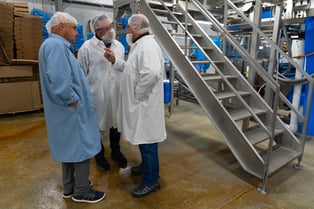
We’re very serious about use of our registered trademarks. We have to be. It is critical that food processors and regulators have absolute faith in what these marks represent. When they see it, they need to know they can trust the equipment is built and verified to meet the 3-A Standards.
Q: What are the specific differences - both from a quality and manufacturing perspective - that set Triangle 3-A Certified baggers apart from the rest of the VFFS market?
Eric: Well, the uncertainty is the point I’d like to make about the value of the 3-A Symbol across the board.
We know that the Triangle VFFS conforms with 3-A Sanitary Standards. It holds the only 3-A Symbol for Vertical Form Fill Seal (VFFS) equipment under the 3-A Sanitary Standard for Equipment for Packaging Non-Fluid Products (27-08).
And, we know that Triangle has a longstanding commitment to VFFS conformance with 3-A Standards. It has passed the rigorous TPV inspection twice – as part of initially earning the Symbol in 2017 and re-verification in 2022. Of course, it will have to pass the TPV again in 2027.
As with all 3-A Symbol holders, this represents a substantial long-term commitment to hygienic design.
Without the 3-A Symbol, industry may not know if the equipment would meet CIP/COP design requirements or how it would fare during a regulatory equipment review.
Q: Why should end users choose a 3-A Certified bagger for their sanitary packaging operation?
Eric: In a marketplace where a single contamination event can lead to catastrophic recalls and brand damage, the 3-A Symbol promotes trust, mitigates risk, simplifies the inspection process for health officials, and positions a brand as a premium, safety-first leader.
The 3-A SSI Third Party Verification inspection reduces the "trust gap" between buyers and sellers, because the equipment is inspected by hygienic design experts who are credentialed by 3-A SSI.
Equipment that has earned the 3-A Symbol/RP Mark uniquely streamlines regulatory inspections. When equipment is in conformance with relevant 3-A Standards, it also complies with the FDA and USDA regulations for Grade 'A' Dairy Equipment. Processors don't have to worry about how the equipment is made, and regulators don't have to do their own engineering review.
For manufacturers who are considering certification — or who are early in that process — Triangle's track record is a useful reference point. Earning the Symbol in 2017, successfully completing re-verification in 2022, and continuing to hold the only 3-A Symbol for VFFS equipment under Standard 27-08 reflects what long-term commitment to hygienic design looks like in practice. That's the standard we hold all of our symbol holders to, and it's what end users can rely on when they see the 3-A Symbol on equipment they're considering for their operation.
Still want to hear more from Eric on 3-A certification? Click here to read Part 2 of his interview as he digs deeper into hygienic design.
Ready to talk to our sanitary experts about your next hygienic vertical bagger?


